Action Family Network statement on age limits and social media restrictions
A safeguarding-led, rights-based and evidence-informed response to proposals on under-16 social media use
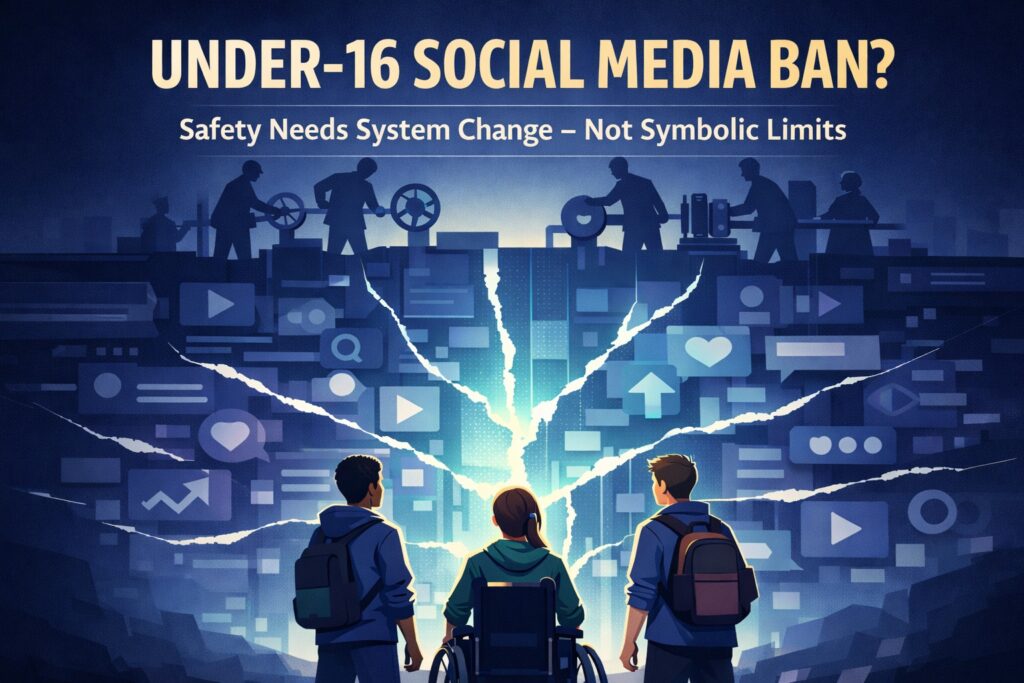
Action Family Network (AFN), as a Core Member of the Anti-Bullying Alliance, welcomes the UK-wide debate on whether minimum age limits for social media and restrictions on smartphones in schools should be used to improve children’s safety online.
We recognise the anxiety driving these proposals. But we are clear: age limits and bans, on their own, will not solve the safeguarding challenges children and young people face online — including bullying, harassment, exploitation, coercion, and exposure to harmful content.
This is not only a policy question. It is a child safeguarding, equality, and public protection issue.
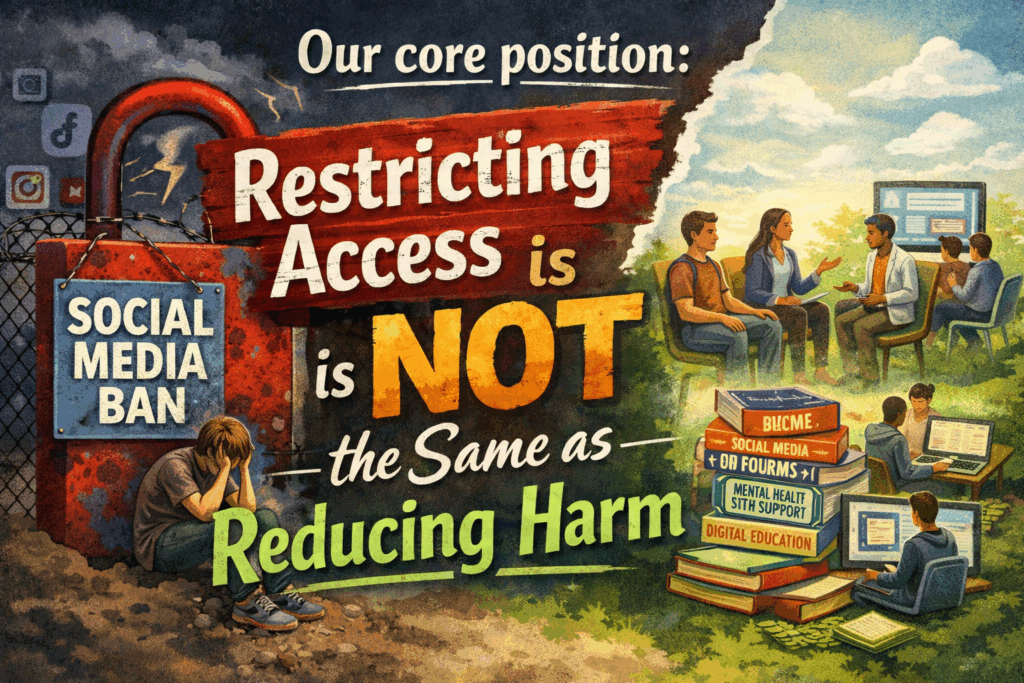
1) Our core position: restricting access is not the same as reducing harm
Children will still be online. Online bullying will still happen. And harm can be displaced into less visible and less regulated spaces if policy is built around restriction alone.
AFN therefore supports a balanced approach that prioritises:
- Platform accountability and safer-by-design standards
- Effective age assurance and enforcement (where introduced)
- Investment in prevention, education, and response capacity
- Meaningful participation of children and young people
- Equality impact assessment and non-discrimination
2) Safeguarding duties must extend meaningfully into digital spaces
Online harm must be treated as a safeguarding issue. Under the Children Act 1989 and Children Act 2004, public bodies and those working with children hold duties to safeguard and promote children’s welfare.
In practice, digital life is now embedded in childhood meaning safeguarding obligations must be applied where children are, including online.
Any policy proposal should therefore be assessed against whether it:
- Prevents foreseeable harm (not merely limits access)
- Strengthens protective systems around children (school, family, community, statutory services)
- Improves reporting, response and recovery pathways for children experiencing harm
3) Platform accountability must be central — not optional
AFN strongly supports robust implementation and enforcement of the Online Safety Act framework. Protecting children from harmful content and activity is a key aim of the Online Safety Act 2023, and concerns remain about children’s online safety and social media use.
Government has also indicated intent to address risks linked to powerful platforms, addictive design and fast-moving technologies, alongside possible action on age limits and design features.
AFN’s position is that tech companies must be required not encouraged to:
- Build platforms that are safe by design and genuinely age-appropriate
- Remove or constrain addictive features that drive prolonged use (including infinite scrolling)
- Be transparent about risk assessment, mitigations, and outcomes
- Face clear consequences where preventable harm occurs
- Maintain strong systems for detection and disruption of grooming, coercion, and bullying behaviours
Responsibility must not be displaced onto parents, schools, and children as the primary line of defence.
4) Prevention, education and support must match regulation
Regulation without resourcing is a false economy. Families and schools need:
- Practical, accessible guidance (including safety settings and conversation tools)
- Training to recognise and respond to online bullying and coercion
- Trauma-informed and culturally competent safeguarding approaches
- Clear pathways into early help, school safeguarding teams, and specialist support
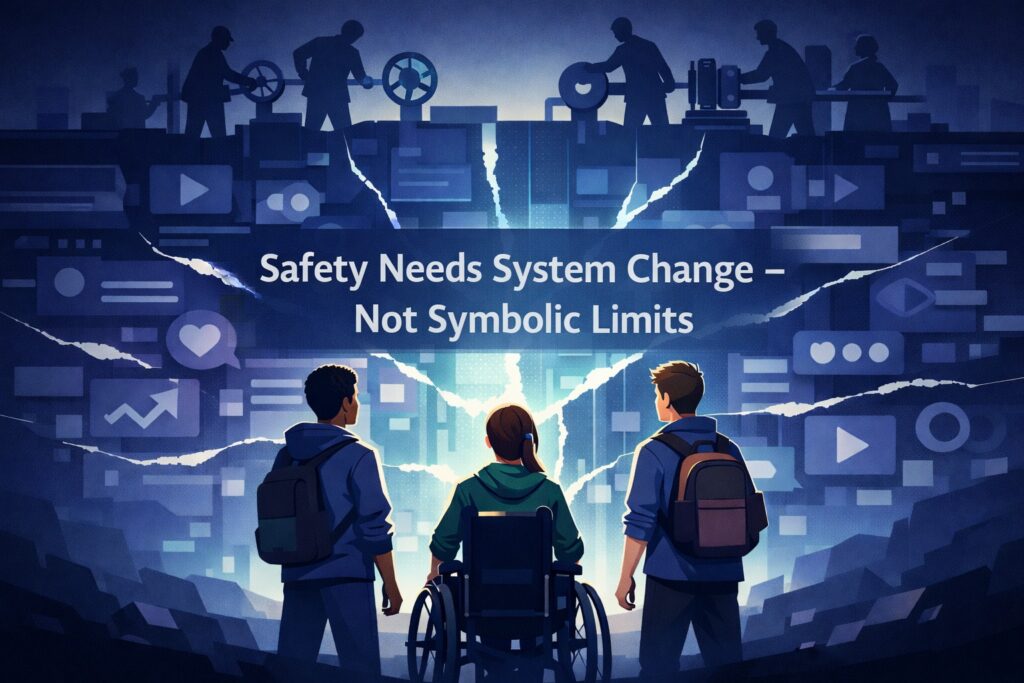
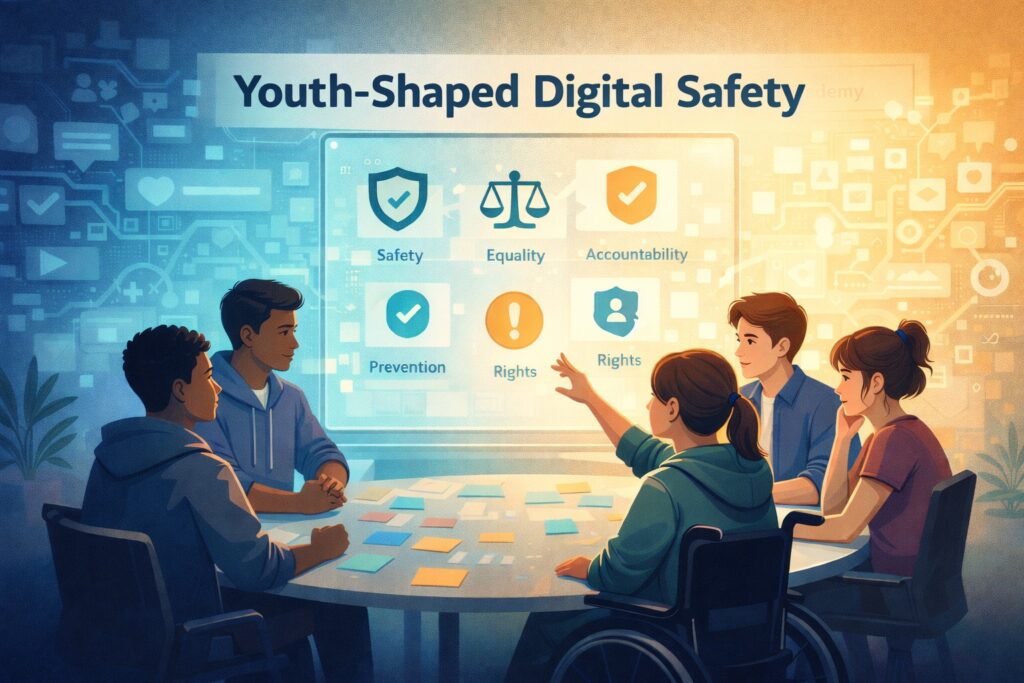
AFN and the Impact and Legacy Youth Leadership Academy (ILYLA) advocate for whole-community safeguarding, where children’s safety is not dependent on a single measure (like age limits), but on a strong protective ecosystem.
5) Equality and children’s rights must be protected in policy design
Any new restrictions must comply with the Equality Act 2010 and the Public Sector Equality Duty (PSED). Equality impact assessments are not “nice to have” they are essential to lawful, fair, and effective policymaking.
The House of Commons Library notes concerns that bans could limit the ability of marginalised groups to create online communities.
AFN sees this in frontline work: online spaces can provide vital connection, identity affirmation, and support particularly for:
- Disabled young people
- Care-experienced young people
- Racially minoritised children and young people
- LGBTQ+ young people
- Young people facing isolation, poverty, or unsafe home environments
Policy must avoid unintended harm that widens inequality, reduces access to support, or silences children who rely on online connection.
6) Young people must shape solutions — not be managed by them
Government has recognised the importance of listening to parents and children through consultation processes.
We go further: children and young people must be meaningfully involved in decisions that affect their digital lives especially in defining what “healthy online experiences” should look like, and what protections are realistic and workable.
AFN and ILYLA stand ready to facilitate youth-informed engagement — ensuring policy is grounded in lived experience, not assumptions.
What AFN is calling for?
AFN supports an evidence-led, safeguarding-first approach that prioritises outcomes over headlines. We urge Government to adopt a package that includes:
- Mandatory safer-by-design standards and design-risk controls (including addictive design patterns)
- Effective age assurance proportionate and privacy-preserving — with enforcement mechanisms (not symbolic rules)
- Clear accountability where platforms fail to prevent foreseeable harm
- Sustained investment in school and parent capacity: guidance, training, and response pathways
- Equality impact assessments and compliance with the Equality Act 2010 and PSED, before introducing restrictions
- Meaningful youth participation in policy development and evaluation
For Policymakers
Action Family Network Invites Members of Parliament, officials within the Department for Science, Innovation and Technology (DSIT), the Department for Education, and relevant parliamentary committees to engage directly with us as policy proposals on under-16 social media restrictions are developed and implemented.
As a Core Member of the Anti-Bullying Alliance, and through our frontline safeguarding work with diverse families and young people, we bring practical insight into how online harm manifests and how policy can either mitigate or unintentionally displace risk.
We stand ready to:
- Contribute frontline safeguarding evidence to DSIT consultations and regulatory development
- Facilitate youth-informed engagement through Impact and Legacy Youth Leadership Academy (ILYLA)
- Support equality impact considerations under the Equality Act 2010 and Public Sector Equality Duty
- Provide practitioner insight into implementation challenges within schools and communities
We believe effective regulation must be safeguarding-led, enforceable in practice, equality-compliant, and shaped with young people themselves. AFN welcomes the opportunity to work constructively with Government to ensure that online safety reforms deliver measurable harm reduction — not just symbolic change.
Our commitment
Action Family Network welcomes constructive dialogue and supports the Anti-Bullying Alliance’s ambition to contribute a shared, balanced position that avoids polarisation.
We stand ready to work with Government, schools, communities, and partners to deliver online safety policy that is:
Safeguarding-led. Evidence-informed. Equality-compliant. Youth-shaped. And enforceable in practice.
By Martin Asamoah
Martin Asamoah is an award-winning safeguarding consultant, social impact leader, and Founder & CEO of Action Family Network C.I.C. (UK). With over a decade of experience in child protection, safeguarding, family support, and community development, he is recognised for his work helping organisations, schools, professionals, and communities create safer environments for children and young people.
As the Senior Mentor of the Impact & Legacy Youth Leadership Academy, Martin has developed innovative programmes that equip young people with leadership skills, emotional intelligence, financial literacy, digital awareness, active citizenship, and future-focused competencies, including artificial intelligence and coding. His work focuses on addressing the root causes of vulnerability, preventing youth violence, and building resilience among young people and families.
A respected commentator on safeguarding, youth behaviour, online safety, and community wellbeing, Martin regularly contributes to discussions on emerging risks affecting children, including social media harms, exploitation, serious youth violence, and the impact of technology on child development.

He advocates for evidence-based, system-wide approaches that strengthen families, empower communities, and place children’s safety and wellbeing at the centre of policy and practice.
Martin is the recipient of the Visionary Leadership in Family Empowerment & Community Wellbeing Award at the Africa–UK Business Conference & Awards 2025 and has been featured in The Business Executive Magazine for his leadership and impact in community transformation, youth empowerment, and Africa–UK collaboration.